Naruto
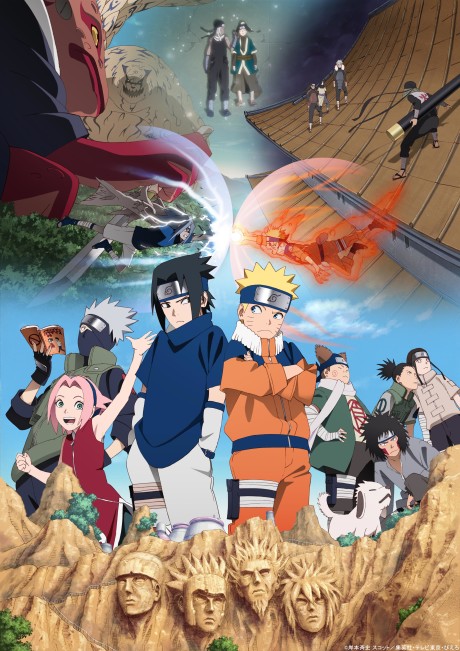
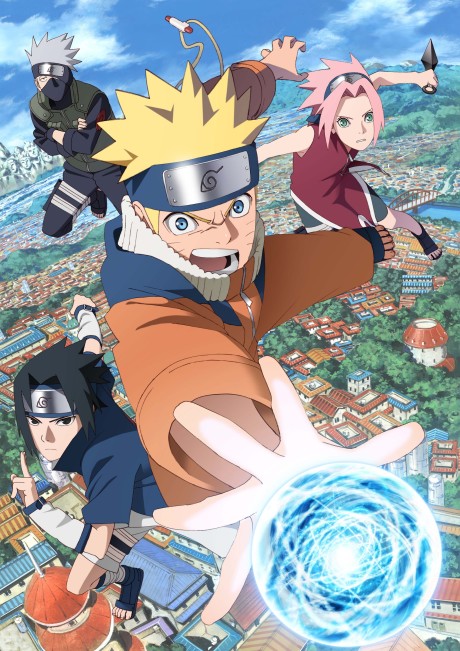
Naruto Uzumaki, a hyperactive and knuckle-headed ninja, lives in Konohagakure, the Hidden Leaf village. Moments prior to his birth, a huge demon known as the Kyuubi, the Nine-tailed Fox, attacked Konohagakure and wreaked havoc. In order to put an end to the Kyuubi's rampage, the leader of the village, the 4th Hokage, sacrificed his life and sealed the monstrous beast inside the newborn Naruto. Shunned because of the presence of the Kyuubi inside him, Naruto struggles to find his place in the village. He strives to become the Hokage of Konohagakure, and he meets many friends and foes along t…
🎬 Trailers & VidéosPreview
🎵 Music & Co-listeningPreview
🎨 Ton avatar inspiré de NarutoPreview


📰 Articles fans · NarutoPreview
📘 À propos de l'œuvre
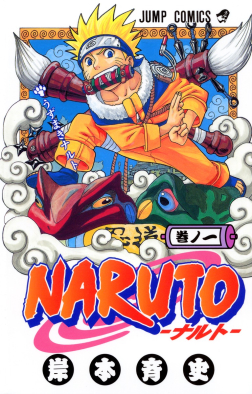
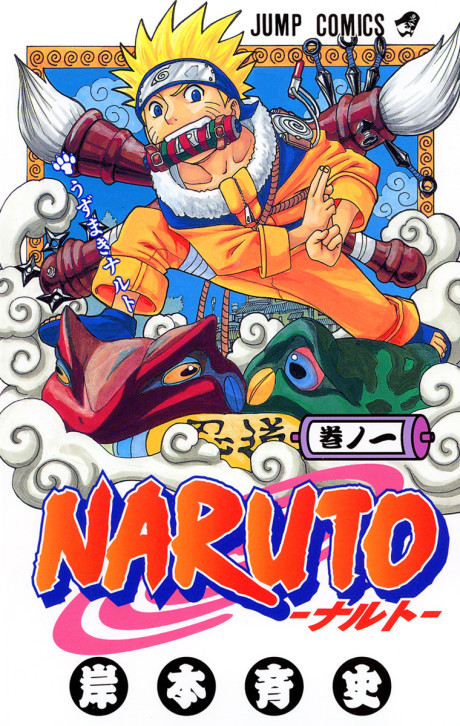
Naruto is a Japanese manga series written and illustrated by Masashi Kishimoto. It tells the story of Naruto Uzumaki, a young, socially isolated ninja who seeks recognition from his peers and dreams of becoming the Hokage, the leader of his village. The story is told in two parts: the first is set in Naruto's pre-teen years, and the second in his teens. The series is based on two one-shot manga by Kishimoto: Karakuri (1995), which earned Kishimoto an honorable mention in Shueisha's monthly Hop Step Award the following year, and Naruto (1997).
🎨 Auteur, équipe & production
✍️ Auteur · ayant droit principal (1)

📝 Scénario (1)

👥 Autres contributeurs (4)
📚 Toute la franchise
12 œuvres liées▶️ Suites (1)



🎭 Personnages
🦸 Personnages principaux (4)
🎭 Personnages secondaires (21)
📚 Tout ce que tu veux savoir
Sources : Wikipedia (CC BY-SA) · ikigai.fan📖Synopsis & univers
Plot
Part I
A demonic nine-tailed fox called Kurama attacks Konoha, the Village Hidden in the Leaves in the Land of Fire, one of the Five Great Shinobi Countries in the Ninja World. In response, the leader of the Leaf, Fourth Hokage Minato Namikaze, sacrifices his life by splitting the fox in half and sealing the fox inside himself and in the body of his newborn son, Naruto Uzumaki, respectively, making him a host of the beast. The Third Hokage, Hiruzen Sarutobi, returns from retirement to become the leader of the Leaf again. Naruto is often scorned by Konoha's villagers for being the host of the Nine-Tails. Due to a decree by the Third Hokage forbidding any mention of these events, Na…

🛠Production & développement
Production
Development
In 1995, Shueisha published Karakuri, a one-shot manga by Masashi Kishimoto, which received an honorable mention in the 1996 Hop Step Award. Dissatisfied with subsequent draft proposals, Kishimoto began developing a new project. An early concept featured Naruto as a chef, but this version was never published. Kishimoto then developed a one-shot for the summer 1997 issue of Akamaru Jump, based on an idea of a boy who could transform into a fox. Despite positive reader feedback, Kishimoto revised the concept into a ninja-themed story due to dissatisfaction with the art and narrative.
The first eight chapters were planned prior to serialization in Weekly Shōnen Jum…
💡Thèmes & analyse
Themes
Amy Plumb argues that Kishimoto's use of references to Japanese mythology in Naruto is intended to add further layers to the story. Kishimoto expects his readers to decode the references, which allows him to avoid direct explanations. One example is Itachi, who has three ninja techniques named after Shinto deities: Tsukiyomi, Amaterasu, and Susano-o. Plumb also cites Sasuke's clan's heraldic symbol, a fan known as an uchiwa. These fans are used in Japanese myths to exorcise evil by blowing it away; Sasuke discovers late in the series that he has the ability to "blow away" the influence of the Nine-Tailed Fox on Naruto. Foxes (kitsune tsuki) are tricksters in Japanese mythology, a…
📚Manga
Manga
Written and illustrated by Masashi Kishimoto, Naruto was serialized for a 15-year run in Shueisha's magazine, Weekly Shōnen Jump from September 21, 1999, to November 10, 2014. Shueisha collected its chapters in 72 tankōbon volumes—27 for Part I, and the rest for Part II; they were released between March 3, 2000, and February 4, 2015. The first 238 chapters are Part I and constitute the first part of the Naruto storyline. Chapters 239 to 244 include a gaiden (side-story) focusing on Kakashi Hatake's background. The remaining chapters (245 to 700) belong to Part II, which continues the story after a 2+1⁄2-year gap in the internal timeline. Shueisha have also released several a…
🎞Anime — saisons & OVAs
Anime
The first Naruto anime television series, directed by Hayato Date and produced by Pierrot and Aniplex, premiered on TV Tokyo in Japan on October 3, 2002, and concluded on February 8, 2007, after 220 episodes. The first 135 episodes were adapted from Part I of the manga; the remaining 85 episodes are original and use plot elements that are not in the manga. Tetsuya Nishio was the character designer for Naruto when the manga was adapted into an anime; Kishimoto had requested that Nishio be given this role.
The second anime television series, titled Naruto: Shippuden, was also produced by Pierrot and directed by Hayato Date, and serves as a direct sequel to the first Naruto anime se…
🎬Films & adaptations
Films
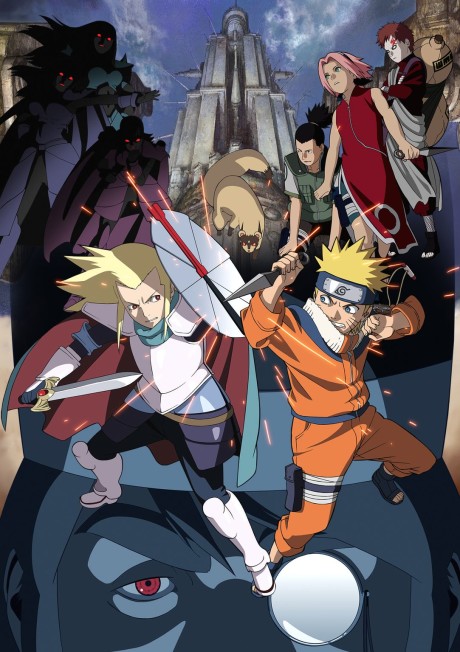
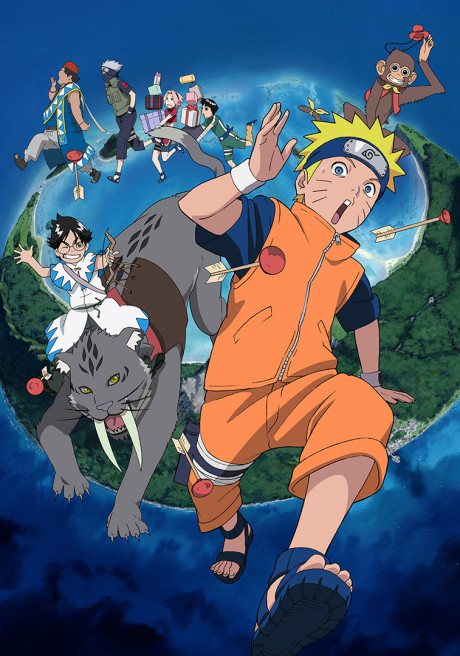
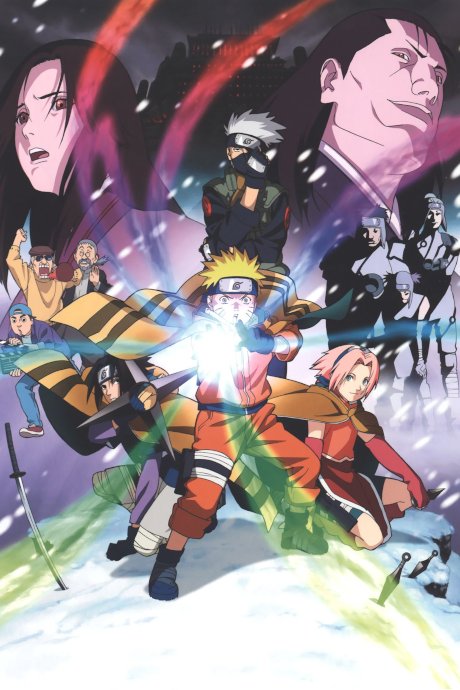
The series was also adapted into 11 theatrical films and 12 original video animations (OVAs) In July 2015, Lionsgate announced the development of a live action film with Avi Arad through his production company Arad Productions. The film was planned to be directed by Michael Gracey. On December 17, 2016, Kishimoto announced that he has been asked to co-develop. On November 27, 2023, it was announced that Tasha Huo will work on the script for the film. On February 23, 2024, Gracey had exited the project, and Destin Daniel Cretton had been hired to direct and co-write the film. Cretton received his blessings from Kishimoto, after a visit in Tokyo, with Kishimoto stating that when he …
🎮Jeux vidéo
Video games
Naruto video games have been published by various companies for consoles such as those by Nintendo, Sony, and Microsoft. The majority of them are fighting games in which the player directly controls one of the characters from Naruto. The player pits their character against another character controlled by the game's AI or by another player; the objective is to reduce the opponent's health to zero using basic attacks as well as special techniques unique to each character derived from techniques they use in the Naruto anime or manga. The first Naruto video game was Naruto: Konoha Ninpōchō, which was released in Japan on March 27, 2003, for the WonderSwan Color. Most Naruto vide…
🖼Art books & guides
Art and guidebooks
Three official artbooks based on the Naruto series have been released. The first two, titled Art Collection: Uzumaki, and Illustration Collection: Naruto, were released in Japan in 2004 and 2009, with North American editions following in 2007 and 2010 respectively. The third artbook Illustration Collection: Naruto Uzumaki, was published in 2015 in Japan and later the same year in North America; it contains artwork originally on Shonen Jump comic covers. It has no text except a brief commentary by Kishimoto about his favorite artworks. An interactive coloring book called Paint Jump: Art of Naruto was released in 2008. An unreleased artbook titled Naruto Exhibition Offi…
📦Autres médias & goodies
Merchandise
Video games
Naruto video games have been published by various companies for consoles such as those by Nintendo, Sony, and Microsoft. The majority of them are fighting games in which the player directly controls one of the characters from Naruto. The player pits their character against another character controlled by the game's AI or by another player; the objective is to reduce the opponent's health to zero using basic attacks as well as special techniques unique to each character derived from techniques they use in the Naruto anime or manga. The first Naruto video game was Naruto: Konoha Ninpōchō, which was released in Japan on March 27, 2003, for the WonderSwan Color. Mos…
🏆Réception & ventes
Reception
Sales
The manga has 250 million copies in circulation worldwide, making it one of the best-selling manga series in history. More than half of the total circulation is in Japan, with the remaining circulation being from 46 other countries and regions. It has become one of North American publisher Viz Media's best-selling manga series; their translation of the series appeared on the USA Today and The New York Times bestseller lists several times. It was included in the fiction section of the Teacher Librarian's recommended list for 2008, and School Library Journal described it as an essential manga for school libraries. Volume 28 of the manga reached seventeenth place in t…
Êtes-vous ayant droit ? Claim →
🎮 Engage avec cette œuvre
🏆 Tu es ayant droit de cette œuvre ?
Lance une campagne reward-based pour pré-financer la suite. KYC strict, testimony public, refund automatique 18 mois. Tu gardes 100% de tes droits éditoriaux.
Réclamer cette œuvre →